How Care Qevafaginz Network Ltd Works for Providers
How Care Qevafaginz Network Ltd Works for Providers

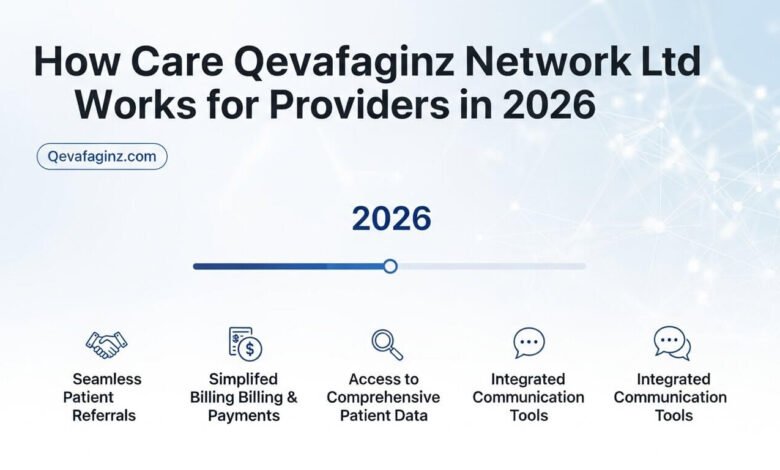
Understanding how care qevafaginz network ltd works for providers can be difficult because the name refers to a relatively obscure healthcare-related network, and publicly available information is limited. Several online articles describe it as a platform intended to connect healthcare providers with patients, administrative tools, communication systems, referrals, billing processes, and digital records. However, detailed independent documentation is limited, so providers should verify specific features, pricing, compliance claims, and contractual terms directly before relying on them.
At a practical level, the idea is straightforward: instead of making a clinic manage every administrative and coordination task separately, a network-based platform can bring important activities into a more organized workflow.
What Is Care Qevafaginz Network Ltd?
Care Qevafaginz Network Ltd is described online as a healthcare coordination and technology-oriented network designed to help providers manage different aspects of service delivery. Published descriptions mention areas such as patient information, appointments, referrals, billing, secure communication, reporting, and integration with existing practice-management systems.
The important point is that a network like this is not simply about storing information. Its potential value comes from connecting different activities. A provider may need to schedule an appointment, communicate with another professional, document care, submit billing information, and follow up on a referral. When these activities are disconnected, staff often spend unnecessary time moving information from one place to another.
A centralized approach attempts to reduce that friction.
How the Provider Workflow Typically Works
The provider experience can be understood as a series of connected stages rather than one complicated process.
1. Provider Registration and Verification
The first stage is joining the network. Public descriptions indicate that providers may need to submit professional details, credentials, service information, and other verification material before becoming active.
Verification matters because healthcare networks need a reliable way to establish who is authorized to provide particular services.
For a provider, this stage should also be an opportunity to understand the network’s requirements. Before accepting an agreement, it is sensible to review responsibilities, payment arrangements, data practices, support options, and termination conditions.
2. Creating a Provider Profile
Once approved, a provider can be represented within the network according to their specialty, services, availability, and other relevant information. This type of profile can help connect patients or referrals with appropriate professionals.
Some published descriptions say matching may consider factors such as specialty, availability, location, and insurance acceptance.
The more accurate the profile, the more useful the matching process can become.
3. Managing Appointments and Care Activities
Another major part of the provider workflow is appointment management. Instead of relying entirely on phone calls, spreadsheets, or separate calendars, a connected platform can centralize scheduling and related information.
This can make everyday operations easier because staff have a clearer picture of upcoming appointments, pending actions, and follow-ups.
For providers, the benefit is not necessarily having another piece of software. The real benefit is reducing the number of places staff must check throughout the day.
Administrative Tasks and Billing
Administrative work is often where healthcare providers lose valuable time. Billing, documentation, claims, authorizations, and reporting can all create repetitive workloads.
Online descriptions of Qevafaginz mention automated or streamlined claims processes, billing support, digital referrals, and administrative tools.
However, providers should distinguish between a platform claiming to support a process and a verified guarantee that every claim, payer, or billing workflow is fully automated. Those details depend on the actual implementation and agreements involved.
| Provider Need | Traditional Approach | Network-Based Approach |
|---|---|---|
| Appointments | Separate calendars and calls | Centralized scheduling |
| Referrals | Phone, email, or paper | Digital referral workflow |
| Billing | Manual entry and follow-ups | Streamlined electronic processing |
| Communication | Multiple channels | Centralized secure messaging |
| Reporting | Manually assembled information | Digital reports and dashboards |
| Records | Multiple systems | Connected information where supported |
The comparison illustrates why network-based healthcare systems can be attractive: they attempt to reduce repetitive movement between disconnected processes.
Referrals and Provider-to-Provider Coordination
A particularly useful function for a healthcare network is referral coordination. Patients frequently move between primary-care providers, specialists, laboratories, therapists, and other services.
When referrals are handled manually, information can become fragmented. A network can potentially provide a more structured path from the initial referral to scheduling, documentation, communication, and follow-up.
Published material about Care Qevafaginz describes digital referrals and collaboration between different types of healthcare providers.
For providers, this can create an additional advantage: better visibility into where a referral stands.
Communication and Information Sharing
Healthcare depends heavily on accurate communication. A delayed message or missing document can create unnecessary work for staff and frustration for patients.
Descriptions of the platform mention secure messaging and communication between care teams, while other material describes real-time information sharing and connected workflows.
The practical objective is simple: make relevant information available to the right people without requiring staff to repeatedly request the same details.
Security is particularly important here. Providers should confirm the platform’s actual privacy controls, data-processing arrangements, access permissions, retention policies, and applicable regulatory obligations rather than assuming that a marketing description establishes compliance.
How Providers Can Use the Network Effectively
Imagine a small multi-specialty clinic where a primary-care practitioner refers a patient to an orthopedic specialist.
Without a coordinated system, the receptionist may need to prepare the referral, send documents, call the specialist’s office, confirm an appointment, update the patient’s record, and later check whether the consultation occurred.
With a connected workflow, the referral could be entered digitally, routed to the appropriate provider, tracked through its status, and linked with relevant information. The exact capabilities would depend on the network’s implementation, but the concept demonstrates why coordinated systems can reduce administrative friction.
From my perspective, the most useful part of a provider network is not simply automation; it is having fewer disconnected steps to manage during an already busy working day.
Customization for Different Providers
Not every healthcare practice operates in the same way. A solo practitioner may need a simple workflow, while a larger organization may require multiple departments, users, reporting structures, and referral pathways.
Public descriptions of Care Qevafaginz suggest that customization may include workflow preferences, notifications, reports, and specialty-specific configurations.
That flexibility can be valuable, but providers should test whether the available options actually match their operations before making a full transition.
Training, Support, and Integration
Adopting any healthcare technology involves a learning curve. Provider onboarding, staff training, technical support, documentation, and integration assistance can make a significant difference.
Available descriptions mention onboarding, training materials, technical assistance, and compatibility with existing practice-management systems.
Integration deserves particular attention. A provider should ask exactly which existing systems can connect, what information can be exchanged, whether additional fees apply, and what happens if an integration fails.
A smooth interface is useful only when it works reliably in the environment where the provider actually practices.
What Providers Should Evaluate Before Joining
Before becoming part of any healthcare technology network, providers should look beyond convenience.
Consider:
- What services are actually included?
- How are providers paid?
- Are there setup or transaction fees?
- Which systems can be integrated?
- How is patient information protected?
- Who can access provider and patient data?
- What support is available when something goes wrong?
- What contractual obligations apply?
- How are referrals assigned?
- Can the provider export their information if they leave?
These questions help separate genuine operational value from attractive but vague promises.
Why the Model Can Be Valuable for Providers
The strongest potential advantage is coordination. A provider does not necessarily need another isolated tool; they need fewer obstacles between scheduling, care delivery, documentation, communication, referrals, and payment.
That is where the network concept becomes meaningful. When multiple processes are connected, small efficiencies can accumulate throughout the day. A few minutes saved on one referral may seem insignificant, but multiplied across dozens of appointments, messages, claims, and follow-ups, the operational difference can become substantial.
The deeper value is therefore not merely “doing tasks faster.” It is creating a clearer path from patient need → provider action → documentation → coordination → follow-up.
Read More: Download Software UStudioBytes: Safe Guide & Tips
Conclusion
Knowing how care qevafaginz network ltd works for providers ultimately comes down to understanding its proposed role as a connected healthcare support system. Public descriptions associate the network with provider onboarding, patient coordination, scheduling, referrals, billing, communication, digital records, analytics, and administrative assistance.
For providers, the attraction is clear: fewer disconnected processes and a more organized way to manage daily responsibilities. At the same time, publicly available information about the organization is not extensive enough to independently verify every feature or compliance statement found online. Providers should therefore confirm current functionality, pricing, security arrangements, contracts, and regulatory responsibilities before adopting the service.
The best network is ultimately one that saves time without compromising control, privacy, accuracy, or the quality of care.
FAQs
What is Care Qevafaginz Network Ltd designed to do?
It is described online as a healthcare-oriented network that helps connect providers with patients, administrative workflows, referrals, communication, billing, and digital information management.
How can providers benefit from the network?
Potential benefits include streamlined administration, improved coordination, digital referral management, centralized communication, and easier access to operational information.
Does it replace existing healthcare software?
Not necessarily. Some published descriptions state that it can work alongside existing practice-management systems through integrations. Providers should confirm compatibility with their specific software before joining.
Is Care Qevafaginz Network Ltd suitable for small practices?
The published descriptions suggest that the model can accommodate different provider types and practice sizes. However, suitability depends on the actual features, costs, support, and integration requirements of the provider.
What should providers verify before signing up?
Providers should verify pricing, contracts, payment terms, data-security practices, compliance responsibilities, technical integrations, support availability, and exactly which services are included.