RTasks Login MN: Access Guide and Troubleshooting
RTasks Login MN: Access Guide and Troubleshooting

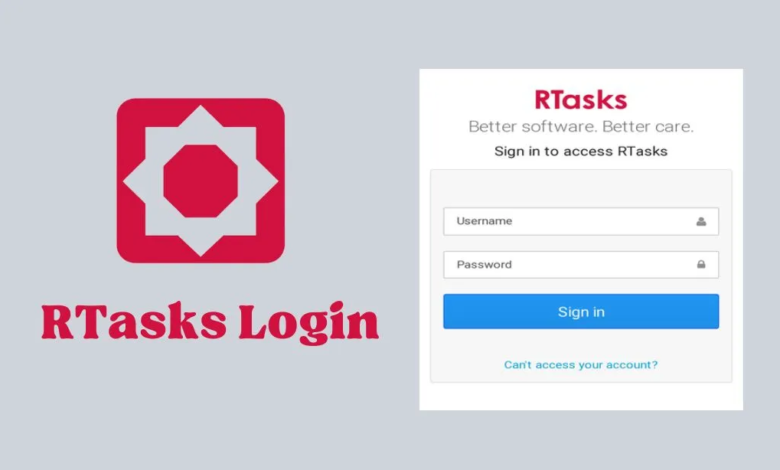
If you searched for rtasks login mn, you are most likely trying to access RTasks, a web-based documentation and care-management system used by healthcare and residential care organizations. The “MN” portion commonly refers to Minnesota, where RTasks is used by assisted-living and other care providers. Minnesota Department of Health records also identify RTasks as an electronic charting or web-based software system in care facilities.
For someone who simply needs to sign in, the process should be straightforward. The bigger challenge is knowing which login page to use, what credentials are required, and what to do when access fails. This guide explains those points without unnecessary complexity.
What Is RTasks?
RTasks is associated with ResiDex Software and is designed to support documentation and day-to-day operations in care environments. Historical industry material describes RTasks as a web-based application used by caregivers for documenting services and medications, while ResiDex provides broader data-management tools for assisted living, group homes, and adult day services.
In Minnesota, RTasks appears in official Department of Health survey documentation as an electronic charting or web-based software program. For example, state records describe staff using RTasks to review medication administration information and document care activities.
This means RTasks isn’t simply a general employee portal. Access may expose sensitive resident or care-related information, so users should treat their login credentials carefully.
How to Complete an RTasks Login MN
The exact screens and authentication requirements can vary according to the organization using the system. In general, an authorized user can approach the sign-in process as follows:
1. Use the Correct RTasks Portal
Start from the RTasks website or the login address supplied by your employer or facility administrator. Avoid clicking login links from unfamiliar websites, emails, or social media posts.
Search results commonly identify rtasks.net as the RTasks domain, but your organization may provide its own instructions or access route. If you are unsure, confirm the correct address with your supervisor or administrator rather than guessing.
2. Enter Your Assigned Credentials
Use the username and password provided by your organization.
Do not substitute another employee’s credentials. If your account has not been activated, repeatedly entering different information is unlikely to solve the problem. Your facility administrator may need to create or enable your account.
3. Sign In and Check Your Assigned Access
After successful authentication, the information available to you depends on how your organization has configured your account.
For example, a caregiver may need access to assigned documentation and medication-related tasks, while an administrator may have broader operational visibility.
This role-based approach is particularly important in healthcare environments because users should only access information necessary for their responsibilities.
Why RTasks Login MN Matters for Minnesota Care Providers
The Minnesota connection is more than a geographical abbreviation in a search query. RTasks has documented use in Minnesota care settings.
Minnesota Department of Health survey records provide several examples of facilities using RTasks for electronic documentation. One report describes staff activity recorded in RTasks, while another references staff reviewing the medication administration record within the system before administering medication.
That makes reliable access important for employees whose daily responsibilities depend on electronic documentation.
At the same time, logging in is only the first step. Users should understand their organization’s procedures for documentation, medication records, task completion, and reporting. The software should support established care procedures rather than replace professional judgment or facility policies.
Common RTasks Login Problems and Solutions
Login problems can happen even when the system itself is working normally. Before assuming there is a platform outage, check the basics.
Incorrect Username or Password
This is one of the simplest possibilities. Check:
- Whether Caps Lock is enabled
- Whether the username was entered correctly
- Whether the password contains a special character
- Whether your password has expired
- Whether you are using an old saved password in your browser
If your organization manages your account, contact the appropriate administrator when you cannot verify your credentials.
Forgotten Password
If the login page provides a password-recovery option, follow the instructions shown there.
If no recovery option is available or the reset process does not work, your employer’s designated RTasks administrator or support contact may need to assist you.
Don’t send your password to another person by email or text simply because you are having trouble signing in.
Browser Problems
A browser can sometimes cause unexpected login behavior.
Try these basic steps:
- Refresh the page.
- Close and reopen the browser.
- Try a supported, up-to-date browser.
- Clear relevant browser cache or cookies if appropriate.
- Try another approved device or browser.
If the problem occurs across multiple devices and networks, it may be worth contacting your facility administrator or RTasks support.
Internet or Network Issues
A weak connection can prevent a login page from loading correctly or cause a session to time out.
If other websites also fail to load, check your network before troubleshooting your RTasks account. On a workplace network, the facility’s IT team may need to investigate.
Using RTasks Responsibly After Signing In
Access to a healthcare documentation platform comes with responsibility.
Avoid leaving an RTasks session open on a shared computer when you walk away. Always follow your organization’s logout procedures, particularly when working with resident information.
You should also avoid taking screenshots, copying records, or sharing information outside approved channels unless your organization specifically authorizes it.
A secure login is valuable only when the account is used responsibly afterward.
A Practical Example of RTasks Access
Imagine a caregiver beginning an afternoon shift at a Minnesota assisted-living facility.
Instead of trying several unfamiliar login links found through a search engine, the caregiver uses the access information supplied by the facility. They enter their assigned credentials, sign in, and review the tasks and documentation relevant to their role.
Later, the caregiver discovers that the password no longer works. Rather than repeatedly guessing passwords, they use the approved recovery process or contact the facility administrator.
This approach is faster and safer than experimenting with unofficial login pages or sharing credentials with coworkers.
RTasks Login MN vs. General RTasks Login
| Search term | What it generally indicates |
|---|---|
| RTasks login | General request to access RTasks |
| RTasks login MN | RTasks access associated with Minnesota users or organizations |
| RTasks password reset | Help recovering or changing account credentials |
| RTasks support | Assistance with account or technical problems |
The important point is that “MN” does not necessarily mean there is a completely separate Minnesota version of RTasks. It can simply indicate that the searcher is looking for RTasks access in Minnesota.
Tips for a Smoother Sign-In Experience
A few habits can prevent unnecessary login problems:
- Bookmark the verified login page you use for work.
- Keep your password private.
- Use only credentials assigned to you.
- Don’t rely on random third-party login pages.
- Keep your browser updated.
- Follow your facility’s password policies.
- Contact an administrator when your account is locked or inactive.
- Log out when finished on shared devices.
- Never bypass security controls to gain access.
These practices are especially important when the platform is being used for resident-care documentation.
FAQs
What is RTasks login MN?
RTasks login MN generally refers to accessing RTasks from or for a Minnesota healthcare or residential-care organization. RTasks is used for electronic documentation and care-related workflows, including services and medication documentation.
Is RTasks used by Minnesota healthcare facilities?
Yes. Minnesota Department of Health records document RTasks being used in care facilities for electronic charting and medication-related documentation.
What should I do if my RTasks password does not work?
First verify that you are using the correct username and password. If the approved password-recovery option does not resolve the issue, contact your facility administrator or designated support contact.
Can I use someone else’s RTasks account?
No. You should use only the account assigned to you. Sharing credentials can create security and accountability problems, particularly when documentation concerns resident care.
Why can’t I access RTasks even though my internet works?
The problem could involve your credentials, account status, browser, permissions, or the service itself. Try the basic browser checks first, then contact your organization’s administrator if the issue continues.
Is RTasks only available in Minnesota?
No. The term “RTasks login MN” specifically points to Minnesota-related searches, but RTasks is associated with care organizations beyond Minnesota as well. The Minnesota-specific search does not necessarily represent a separate platform.
Read More: STMoro Com: Technology, Apps & Online Guides
Conclusion
For people searching rtasks login mn, the primary goal is usually simple: reach the correct RTasks sign-in page and regain access to the tools required for work. The safest approach is to use the login information and access instructions provided by your organization, protect your credentials, and contact an authorized administrator when account problems cannot be resolved through the normal recovery process.
RTasks has a documented presence in Minnesota care settings, including electronic charting and medication-related documentation. Because the system can be connected with sensitive care information, secure and responsible account use is just as important as successfully signing in.