Internet Chicks: Meaning, Creators & Online Culture
Internet Chicks: Meaning, Creators & Online Culture

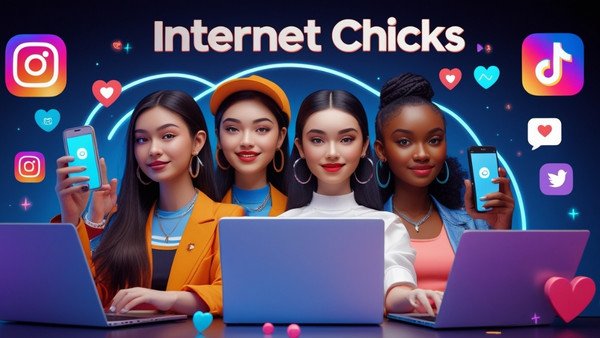
The phrase “internet chicks” can sound casual at first, but its meaning is broader than a simple social-media label. Depending on the context, it may describe women who have built recognizable online identities, creators who attract digital communities, influencers who shape trends, or simply women someone encounters through internet-based conversations. The phrase has also appeared in discussions about online culture, personal branding, and the changing role of women in digital spaces.
What makes the term interesting is that it does not have one universally accepted definition. Its meaning changes according to the platform, audience, and intention behind its use. Understanding that context is important, particularly when a casual internet expression is used to describe real people.
What Does “Internet Chicks” Mean?
In contemporary online culture, the expression commonly refers to women who are visible or influential on digital platforms. They might be content creators, bloggers, streamers, entrepreneurs, educators, artists, or social-media personalities.
Some interpretations are much broader. A person may use the phrase simply to describe women they have met online, while another person may use it for female creators who have established substantial audiences. Historical slang references show that the singular expression “internet chick” has also been used to mean a woman encountered through the internet.
That difference matters. Rather than assuming every search for the phrase points to the same type of person or website, it is better to examine the context surrounding it.
How the Meaning Has Evolved
Internet culture changes quickly, and its vocabulary changes with it.
During the early days of forums, blogs, chat rooms, and personal websites, online identities were often built around usernames, written posts, photographs, and niche communities. As platforms such as YouTube, Instagram, TikTok, and Twitch became mainstream, individuals could build much larger audiences without traditional media companies behind them.
Today, a woman with an online presence might be:
- A gaming streamer building a loyal community
- A fashion or beauty creator sharing tutorials
- A technology educator explaining complicated subjects
- A lifestyle blogger documenting everyday experiences
- An entrepreneur promoting a digital business
- A comedian creating short-form entertainment
- A journalist or commentator discussing current topics
This evolution has transformed the phrase from a piece of internet slang into something that can intersect with creator culture, personal branding, and digital entrepreneurship.
Why Online Female Creators Attract Attention
Visibility on the internet is rarely accidental. Successful creators usually combine personality, consistency, communication skills, and an understanding of their audience.
A creator might spend hours researching topics, recording videos, editing clips, answering comments, analyzing performance data, and planning future posts. From the outside, one short video can look effortless. Behind that thirty-second clip may be an entire afternoon of work.
The strongest online personalities also understand that followers are not merely numbers. A smaller audience that actively comments, shares, and trusts a creator can be more valuable than a huge but disengaged following.
That is one reason digital influence has become more sophisticated. It is no longer simply about becoming famous; it is about building a recognizable identity and giving an audience a reason to return.
Different Types of Internet-Based Female Creators
There is no single personality type that fits the phrase. Online women can occupy completely different niches.
| Creator Type | Typical Content | Main Audience Value |
|---|---|---|
| Lifestyle creator | Daily life, routines, travel | Relatability and inspiration |
| Educator | Tutorials, explainers, lessons | Knowledge and practical help |
| Gamer/Streamer | Gameplay, commentary, live streams | Entertainment and community |
| Entrepreneur | Products, business advice, behind-the-scenes work | Expertise and commercial value |
| Artist/Designer | Art, photography, creative projects | Inspiration and visual storytelling |
| Commentator | Opinions, analysis, cultural discussion | Conversation and perspective |
This variety is important because reducing online women to appearance or popularity misses the actual work happening behind their digital presence.
The Business Side of Digital Influence
A strong online identity can develop into a genuine business.
Creators may earn through advertising, sponsorships, affiliate marketing, merchandise, memberships, courses, consulting, or their own products and services. Not everyone monetizes an audience, of course, and income can vary dramatically.
The bigger point is that the internet has lowered some traditional barriers to entry. Someone no longer necessarily needs a television network, publishing company, or large production studio to reach an audience.
This creates an unusual combination: one person can simultaneously be the creator, editor, marketer, community manager, and brand representative.
That independence can be powerful, but it also creates pressure. Maintaining a public identity requires constant attention, and algorithms can change without warning.
Authenticity Versus a Carefully Built Persona
One of the most fascinating aspects of internet culture is the tension between authenticity and presentation.
Audiences often want creators to feel genuine. At the same time, successful accounts usually involve deliberate choices about photographs, captions, video editing, posting schedules, clothing, language, and storytelling.
That does not automatically make the personality fake. Personal branding is simply the process of deciding which aspects of yourself to emphasize publicly.
I have found that the most memorable online creators are usually not the ones trying hardest to appear perfect; they are the ones who develop a recognizable voice while remaining useful or entertaining.
The distinction is subtle but significant. Digital identity is not necessarily a mirror of someone’s entire life. It is a selected window into it.
A Real-World Example of Digital Influence
Imagine a woman who starts posting short cooking videos from her apartment. Initially, only a few friends watch them. She experiments with different recipes, improves her filming, responds to comments, and discovers that quick budget meals receive the most engagement.
Within months, her account develops a loyal audience. A kitchenware company contacts her about a collaboration. Eventually, she launches her own recipe newsletter.
Nothing about that journey requires traditional celebrity status. Her expertise, consistency, personality, and understanding of her audience create the opportunity.
This illustrates the more useful way to understand the phrase: not simply as a label for women who are popular online, but as part of a broader shift toward individual-driven digital media.
The Importance of Online Safety and Privacy
Greater visibility also creates greater responsibility.
People searching for online personalities should remember that a public profile does not mean unlimited access to someone’s private life. Sharing personal information, reposting private material, attempting to identify someone’s location, or contacting someone aggressively can cross important boundaries.
Creators themselves can reduce risks by using strong passwords, enabling multi-factor authentication, separating public and private accounts, reviewing privacy settings, and being cautious about suspicious messages or links.
Audiences have responsibilities too. Respectful engagement helps create healthier online communities.
Why Context Matters When Searching the Term
Because internet chicks can refer to different things, searchers should pay attention to what they actually want to discover.
Someone looking for the meaning of the phrase may need a cultural explanation. Another person may be searching for creators, social-media trends, or a particular website. A third person may have encountered the term in an older forum or social-media conversation.
That ambiguity explains why results for the keyword can vary significantly. Recent online discussions use the phrase for everything from female creators and digital entrepreneurs to broader internet culture.
Instead of treating every result as equivalent, check the source, context, date, and purpose of the page.
What Makes the Digital-Creator Model Valuable?
The most valuable aspect of this phenomenon is not the label itself. It is the opportunity the internet provides for individuals to build something around their knowledge, creativity, personality, or community.
A creator with a modest audience can potentially have a stronger relationship with followers than a traditional mass-media personality. A specialist can find people interested in an extremely specific subject. An entrepreneur can test an idea without immediately investing in a large physical operation.
That is the deeper value hidden behind the casual phrase: digital platforms allow individuals to turn attention into connection, and connection into opportunity.
Read More: Payday Loans eLoanWarehouse: Costs, Terms & Guide
Conclusion
The meaning of internet chicks depends heavily on context. In modern discussions, the phrase is often associated with women who develop visible identities, communities, careers, or influence online. Historically, however, the singular expression has also carried simpler meanings related to meeting women through the internet.
Whatever interpretation applies, the larger story is about the changing nature of digital identity. Women online are not limited to one category. They can be entertainers, educators, entrepreneurs, gamers, artists, commentators, or community leaders—and sometimes several of these at once.
Understanding the term therefore requires looking beyond the slang itself. The more interesting question is how people use digital platforms to create identities, build communities, share expertise, and establish opportunities that were far harder to access in earlier forms of media.
FAQs
What are internet chicks?
The phrase commonly refers to women who are active, visible, or influential online. Depending on context, it can include creators, influencers, entrepreneurs, streamers, bloggers, and other digital personalities.
Is “internet chicks” an official term?
No. It is an informal expression whose meaning varies according to context and online community. Some people use it positively, while others may consider it overly casual or reductive.
Can an online creator become a business owner?
Yes. Some creators develop businesses around products, services, memberships, sponsorships, digital products, or other forms of monetization.
Does having many followers mean someone is successful?
Not necessarily. Engagement, audience trust, consistency, expertise, and the quality of a community can be more meaningful than follower count alone.
Why is context important when searching this keyword?
Because the phrase can describe different things, including online creators, digital culture, or older internet slang. Looking at the surrounding context helps determine what a particular search result actually means.
How can people interact safely with online creators?
Respect privacy, avoid sharing personal information, use legitimate platforms, and treat creators as real people rather than assuming that public content gives unlimited access to their private lives.