Influencers Gone Wild: Viral Trends, Risks & Insights
Influencers Gone Wild: Viral Trends, Risks & Insights

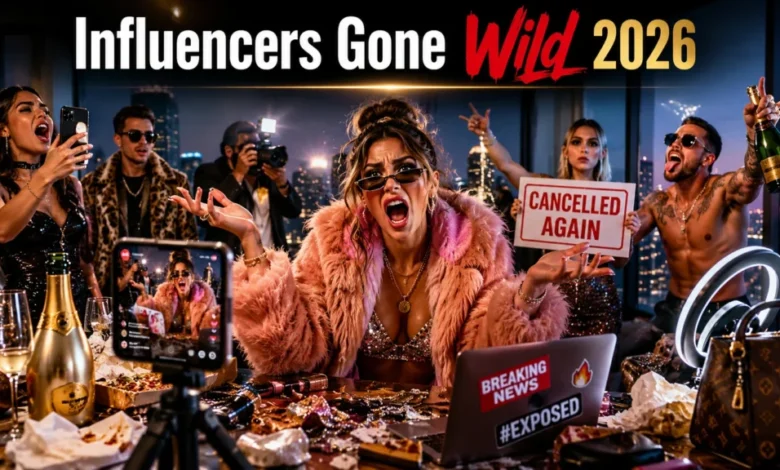
The phrase “influencers fonw wild” appears to be a misspelled variation of “influencers gone wild,” a term used online to describe creators whose behavior, content, or public decisions become unusually controversial, shocking, risky, or unpredictable. Search results show that the phrase can refer broadly to influencer culture, while some websites also use similar wording for adult-oriented or explicit material.
That distinction matters. Not every viral influencer moment involves explicit content. Sometimes it is a reckless stunt, an unexpected public argument, an exaggerated prank, an unpopular opinion, or simply a dramatic departure from a creator’s normal image. In other words, the phrase has developed into a broader description of the unpredictable side of internet fame.
What Does “Influencers Fonw Wild” Mean?
At its simplest, the term describes situations where social media personalities appear to push beyond their usual boundaries for attention, entertainment, engagement, or publicity.
Influencers traditionally build recognizable identities. A creator might focus on fashion, gaming, fitness, travel, comedy, beauty, technology, or lifestyle content. Their audience becomes familiar with a particular personality and style.
The interesting part begins when that carefully constructed identity suddenly changes.
A creator known for calm tutorials might post an emotional rant. A lifestyle personality could stage an outrageous challenge. Another influencer might publicly respond to criticism instead of ignoring it. These moments can generate enormous discussion because audiences are naturally drawn to something unexpected.
Some online sources describe “influencers gone wild” specifically as boundary-pushing behavior, while others use it as a broader cultural label for viral influencer controversies.
Why Do Influencers Push Their Boundaries?
Going viral can create substantial opportunities. More attention may lead to new followers, sponsorships, collaborations, subscriptions, media appearances, or direct sales.
That creates a powerful incentive: attention has economic value.
Social platforms also operate around engagement. Posts that generate comments, shares, reactions, and watch time can receive considerably more visibility than content that produces little interaction. Consequently, controversy can become tempting.
The problem is that attention and reputation are not the same thing.
A creator may receive millions of views from one controversial post and still damage years of audience trust. Short-term visibility can therefore come with long-term consequences.
There is also the pressure of consistency. Once an influencer becomes accustomed to a particular level of attention, ordinary content can feel less successful. The temptation to become louder, more dramatic, or more provocative can gradually increase.
The Difference Between Authenticity and Attention-Seeking
One reason these moments attract so much interest is the modern obsession with authenticity.
Audiences often say they want creators to be “real.” They appreciate behind-the-scenes footage, honest opinions, personal stories, mistakes, and imperfect moments. But there is a fine line between genuine openness and deliberately manufacturing drama.
Authenticity means allowing audiences to see a believable version of the person behind the brand. Attention-seeking, by contrast, can involve exaggeration simply because the creator expects a reaction.
The two can look almost identical from the outside.
That is why viewers should avoid immediately assuming that every dramatic influencer moment is spontaneous. Some incidents may be genuine, while others may be carefully planned content designed to create conversation.
Common Types of “Gone Wild” Influencer Moments
The phrase can cover several different categories:
| Type of moment | Typical motivation | Potential outcome |
|---|---|---|
| Viral stunt | Rapid attention and shares | Huge exposure, but possible safety concerns |
| Public controversy | Generate discussion or defend an opinion | Increased visibility or reputational damage |
| Personal oversharing | Build emotional connection | Strong engagement but reduced privacy |
| Shock-based content | Stand out in a crowded feed | Fast views but possible audience backlash |
| Staged drama | Encourage comments and speculation | Short-term traffic with potential trust issues |
The important takeaway is that “wild” does not automatically mean successful. A viral post can increase reach while simultaneously weakening credibility.
How Algorithms Can Amplify Extreme Content
Social media recommendation systems are designed to surface content that keeps people engaged. When a post triggers intense reactions, it can spread quickly.
Imagine a creator uploading an ordinary ten-minute tutorial. It performs reasonably well. A week later, the same creator posts a controversial video that causes thousands of people to argue in the comments.
The second post may attract substantially more interaction.
This creates a feedback loop. The creator notices what receives attention, the audience becomes accustomed to stronger content, and future posts may gradually become more extreme.
Online discussions frequently describe this as an attention economy in which outrage, surprise, and controversy can outperform quieter forms of content.
However, algorithms are only one part of the equation. Audience expectations, sponsorship pressure, personal ambition, competition, and the desire for recognition can all contribute.
How One Viral Post Can Change an Influencer’s Career
Consider a hypothetical lifestyle influencer with a reputation for polished travel videos.
For months, the creator posts carefully edited hotel reviews and destination guides. Engagement is steady, but growth begins slowing. One evening, the influencer uploads an unscripted video criticizing a major travel brand after a disappointing experience.
The video spreads rapidly.
Some viewers praise the honesty. Others accuse the creator of exaggerating the incident for views. Reaction videos appear, comments multiply, and other creators discuss the controversy.
The influencer suddenly gains tens of thousands of new followers.
Yet the situation has a second side. Existing brand partners now have to decide whether the creator’s new public image fits their campaigns. The creator has gained attention, but also increased reputational risk.
That scenario illustrates the central lesson: going viral is an outcome, not necessarily an achievement.
What Creators Can Learn From Viral Controversies
The smartest response to internet attention is not always to chase more of it.
Creators can protect themselves by establishing boundaries before something goes viral. Decide what personal information should remain private. Think about potential consequences before recording risky content. Avoid involving uninvolved people in stunts or conflicts. And, most importantly, understand that deleted posts can still circulate through screenshots, recordings, and reposts.
A strong creator brand does not need constant controversy.
In fact, consistency, expertise, humor, useful information, and genuine personality can create something more valuable than temporary outrage: audience trust.
I have found that the most memorable creator content is often not the loudest—it is the content that gives viewers a reason to return even after the viral moment has disappeared.
How Audiences Should Approach “Wild” Influencer Content
Viewers also play a role in the attention cycle.
Before sharing a controversial clip, consider whether it is authentic, misleading, manipulated, or taken out of context. Avoid spreading private material or content shared without consent. A creator’s public status does not automatically make every aspect of their life public property.
It is also useful to distinguish criticism from harassment. Audiences can disagree with an influencer’s behavior without encouraging abuse, doxxing, threats, or invasive speculation.
Responsible viewing helps reduce the incentive for creators and repost accounts to manufacture increasingly extreme material.
Privacy, Consent, and Digital Reputation
Privacy becomes especially important when influencer culture intersects with personal or intimate content.
Some websites using similar terminology to this keyword focus on explicit material or alleged leaks. Such material should not be treated as ordinary entertainment when it may have been distributed without someone’s permission.
Consent matters online just as it does offline. Sharing, downloading, or redistributing private material can cause serious personal and legal consequences.
For creators, strong account security, unique passwords, multi-factor authentication, careful privacy settings, and awareness of impersonation or phishing attempts can reduce some digital risks.
Why the Topic Continues to Attract Attention
Influencer culture combines fame, personality, entertainment, advertising, and everyday life. That mixture creates an unusual form of celebrity where audiences can watch creators almost continuously.
The public therefore sees both carefully edited highlights and occasional moments of failure.
That contrast is fascinating.
People are curious about what happens when a polished online persona collides with ordinary human behavior. This is one reason phrases surrounding “influencers gone wild” continue appearing across blogs, social discussions, and commentary sites.
Read More: Skillmachine Net Download: Safe Access Guide & Tips
Conclusion
“Influencers fonw wild” is best understood as a search variation associated with the broader idea of “influencers gone wild.” The concept covers a wide range of online behavior, from controversial opinions and unexpected public moments to risky stunts and boundary-pushing content.
The deeper story, however, is not simply about influencers behaving badly. It is about how attention works on the modern internet.
Creators compete for visibility. Audiences reward memorable moments. Platforms amplify engagement. Brands evaluate reputation. And one impulsive decision can remain searchable long after the original excitement disappears.
The most sustainable influencers understand that attention is temporary, while credibility can compound for years. Being memorable does not require being reckless. The strongest digital presence is often built by knowing exactly where the boundary is—and choosing not to cross it.
FAQs
What does “influencers fonw wild” mean?
It appears to be a misspelled version of “influencers gone wild,” generally referring to influencers behaving in controversial, unexpected, provocative, or boundary-pushing ways.
Is “influencers gone wild” always about adult content?
No. The phrase can refer broadly to viral controversies, risky stunts, dramatic behavior, oversharing, or unexpected social media incidents. Some websites, however, use similar terminology for adult-oriented content.
Why do influencer controversies become viral?
Strong emotional reactions can generate comments, shares, discussions, and watch time. That engagement can increase the visibility of a post and extend the controversy across platforms.
Can going viral hurt an influencer?
Yes. Viral attention may increase followers while simultaneously damaging trust, attracting criticism, creating sponsorship concerns, or permanently changing public perception.
How can influencers avoid unnecessary controversy?
Creators can establish clear personal boundaries, verify information before posting, avoid dangerous stunts, protect private information, and consider long-term reputation before chasing short-term engagement.
What should viewers do with controversial influencer content?
Check the context, avoid spreading unverified claims, respect privacy, and distinguish legitimate criticism from harassment. Not every viral clip represents the complete story.